 Wishlist

When you reach for a plate and a stack topples
Picture grabbing a dinner plate and watching the whole pile slide toward you, or crouching to find the baking tray buried behind a blender. That daily friction adds time and stress. The goal here is clear: organize kitchen cabinets so everything is visible, reachable, and easy to return — without a costly remodel.
What the finished cabinet should feel like
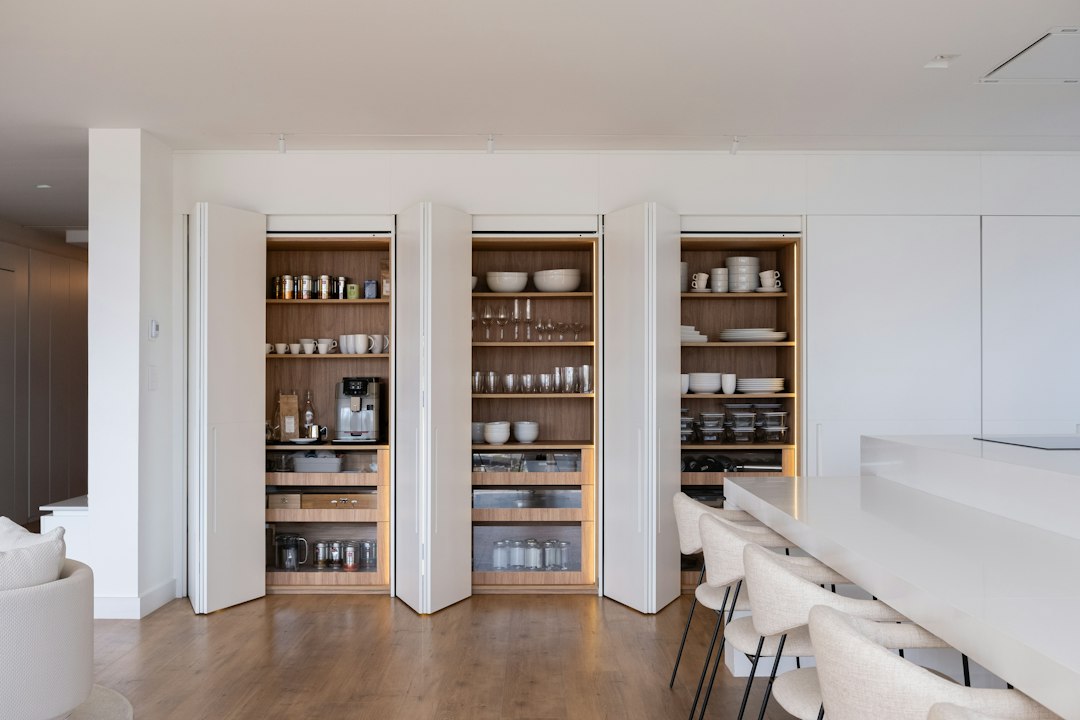
An organized cabinet gives you: defined zones (dinnerware, cookware, pantry), clear sightlines (you can see at least the front row), easy access to heavy or frequently used items, and a quick system for returning things to their place. With a few targeted purchases and a plan, you can create that in an afternoon.
Plan the work before you empty a single shelf
Walk the kitchen with a notebook and answer three short questions for each cabinet: what lives here now, how often do I use those items (daily/weekly/rare), and what’s the most awkward thing about this space (depth, plumbing, lack of shelves)? Label cabinets mentally as heavy, frequent, deep corner, or nuisance.
Clear, sort and purge efficiently
- Empty one cabinet at a time so decisions are local and easier.
- Group similar items: plates together, mixing bowls, bakeware, Tupperware, small appliances.
- Purge by simple rules: duplicates you never reach for; items with missing lids; appliances you haven’t used in 12+ months.
- Use three bins: keep, relocate (belongs elsewhere), donate/throw away. Return relocated items immediately so you don’t create clutter elsewhere.
Zone and assign a permanent home for every category
Assign zones based on function, not by item type alone. Examples: a “dinner prep” zone near stove for mixing bowls and measuring cups; “plates/cups” near dishwasher for unloading; “breakfast snacks” lower shelf or a drawer for kids’ access. Keep frequently used items at eye level or lower (not behind tall stacks).
Fix the most common access problems
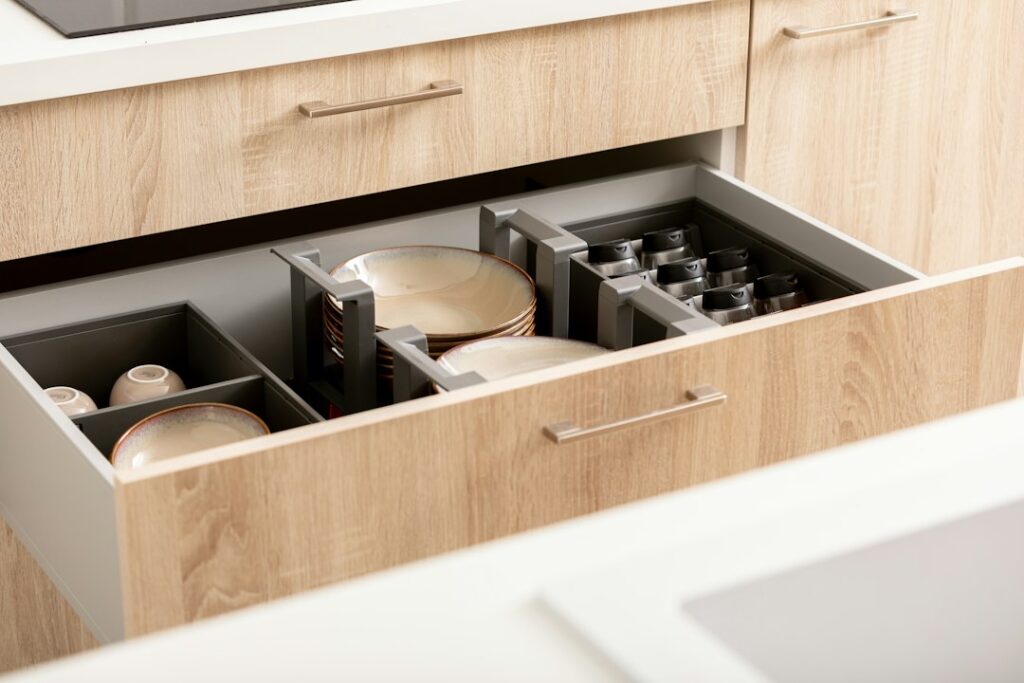
- Overstacking plates and bowls — use cabinet shelf risers to double visible layers and allow you to stack vertically without toppling.
- Deep cabinets where things go to the back — install a single pull-out shelf or a two-tier pull-out basket so you slide the whole contents forward.
- Corner lazy Susan problems — replace a slow-turning space with two-tiered lazy Susans or a flat pull-out tray if the cabinet shape allows.
Under-sink and awkward spaces: prioritize containment and slope
Under-sink cabinets combine plumbing with cleaning bottles — prioritize adjustable racks that avoid the pipes and create a place for sprays. Narrow vertical dividers work for cutting boards or cookie sheets leaning upright. For tall, narrow gaps beside appliances, use a slim rolling cart or tension shelf to create discrete pull-out storage.
For many kitchens the single most effective addition is a sturdy under-sink organizer that keeps liquids upright and pulls out for cleaning access:
Use vertical strategies to reclaim shelf space
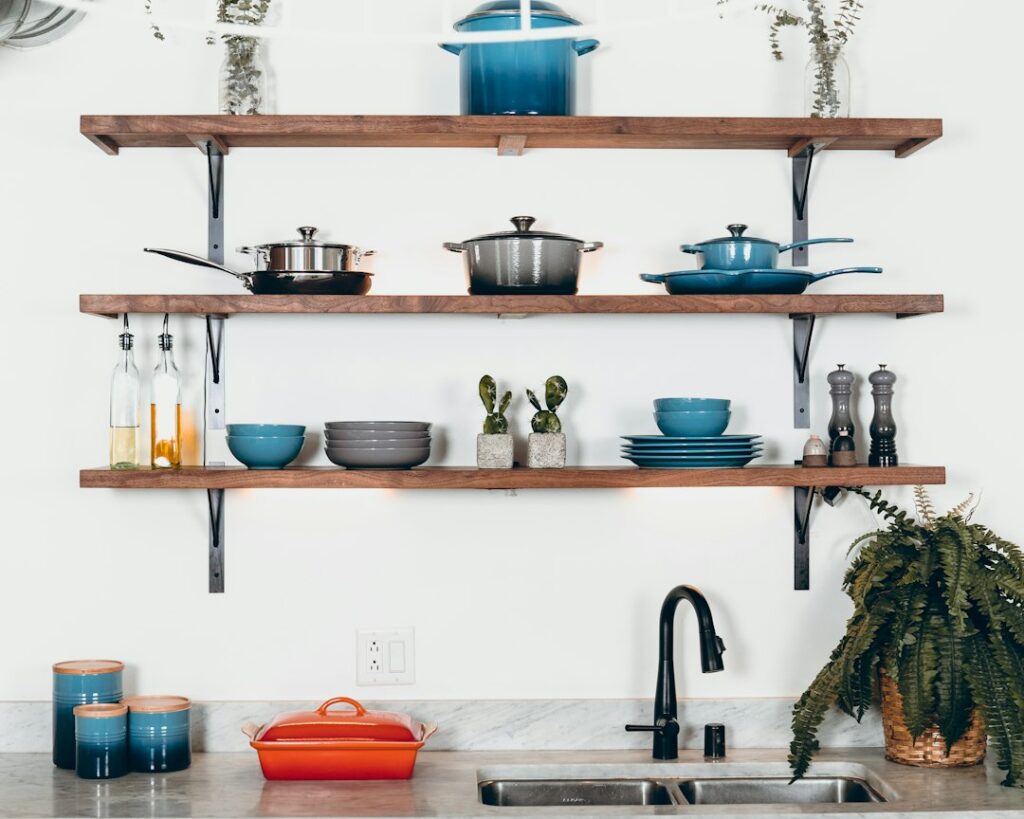
Think up instead of out: add inexpensive shelf risers to stack mugs and bowls, and place frequently used flatware in front while less-used items go behind. Vertical dividers inside lower cabinets convert wasted horizontal space into tidy slots for baking sheets, muffin tins, and cutting boards.
Drawer conversions and small upgrades that feel big

- Convert one lower cabinet to drawers with stackable bins or a rolling organizer if you frequently reach for pots — this makes heavy items easy to pull out.
- Add adhesive pull-out baskets inside doors for wraps, spices, or small cleaning supplies — fast install and no drilling.
- Use clear stacking containers in upper cabinets for snacks and pantry items so you can see quantities and avoid expired goods. Label lids for quick identification.
Make maintenance simple with small habits
Adopt a 60-second nightly reset: return anything left on counters, restack plates, check a single junk drawer. Re-evaluate zones seasonally — you may want baking gear within reach during holidays and less so the rest of the year.
- Identify three cabinet problem areas to tackle first.
- Gather boxes/bins for keep, relocate and donate.
- Buy one key organizer (pull-out or riser) suited to your worst cabinet.
- Plan zones so frequently used items are most accessible.
- Schedule a 30–60 minute weekly reset to keep order.
Organizing kitchen cabinets without remodeling focuses on planning, decluttering and targeted organizers that match each cabinet’s problem: visibility, depth, or awkward piping. One well-placed pull-out or shelf riser usually shifts a whole cabinet from frustrating to functional.
Can I install pull-out shelves without tools?
Some pull-out baskets and adhesive-mounted slides can be installed with minimal tools, but sturdier full-extension drawers usually require basic drilling and screws; follow the product instructions for safe weight limits.
What’s best for corner cabinets?
Two-tier lazy Susans or a kidney-shaped carousel help visibility; if access is still poor, a custom flat pull-out tray system converts the corner into usable workspace.
How do I store rarely used appliances?
Keep them on higher shelves or in a garage/basement. If they must stay in the kitchen, store in labeled stackable bins so you can slide the bin down rather than move multiple items.
Are clear containers worth it for cabinet organization?
Yes for pantry-type cabinets: clear, stackable containers reduce wasted purchases and make it easy to see quantities at a glance.
How do I keep cabinet organization from collapsing over time?
Schedule quick weekly resets, enforce the one-in/one-out rule for duplicates, and keep commonly used items within easy reach so people put them back correctly.